Security Testing for SaaS Products: A CTO’s Checklist
 KiwiQA
Being a startup CTO, you are juggling never-ending priorities. In between these priorities, you always put security at the bottom of the list. The startups are the prime targets for cyber criminals. Want to know why? Here are some surprising stats-
✦ 48% of small & mid-size organizations have witnessed security attacks.
✦ In 2024, a data breach led to $4.88 million.
✦ 82% of CIOs listed software supply chain vulnerabilities.
Mostly, the small & mid-size businesses think attackers won’t target them. However, they have similar chances of vulnerabilities, and that’s where they fail to deal with these challenges. In the current virtual landscape, the adoption of SaaS has transformed how businesses operate, delivering cost-efficient, scalable products. However, these perks come with the challenges that can hamper the organization’s workflow and sensitive data. Being a CTO, your responsibility is to ensure the security of the system. In this blog, we’ll talk about the SaaS security testing services checklist.
Before approving a contract, modern business purchasers require security controls, such as certifications and risk assessments. These days, security requirements either speed up or slow down the selection of SaaS vendors.
More than 30% of organizations report incidents involving SaaS, and breaches typically cost millions of dollars. It results in loss of financial and reputation.
Complying with regulations has become crucial for international expansion. Adhering to compliance opens up regulated marketplaces and permits scalable enterprise contracts.
SaaS companies present security testing as a strength, can command premium pricing, acquire larger clients, and shorten sales cycles.
During investment and transactions, investors are increasingly evaluating cybersecurity governance; robust security indicators can improve valuation and reduce perceived risk.
Complex security dependencies are created by the multi-tenant settings that SaaS services rely on, where several clients share infrastructure. In the absence of stringent segmentation, encryption, and ongoing oversight, a single vulnerability may affect several tenants at once.
SaaS capability is increased by APIs and third-party interfaces, but the attack surface is greatly increased. Inadequate authorization controls, compromised authentication systems, and insecure endpoints can all reveal private client information. Risks are further increased by inadequate token management and session handling. Regular security testing, encryption, and strong API governance are crucial protections.

One of the most prevalent SaaS security threats is still improperly set up cloud settings. Unauthorized access may be made possible via inadequately secured databases and excessively permissive IAM roles. Proactive configuration audits and monitoring are essential because the opportunities are increased by inadequate network segmentation.
Inadequate authentication rules are frequently the cause of IAM vulnerabilities. SaaS security posture is strengthened by putting strong authentication systems and ongoing access checks under software security testing.
Also Read : Complete Guide to Security Testing for E-commerce Websites and Mobile Apps
Proactive risk identification across apps, infrastructure, and integrations is made possible by ongoing vulnerability assessments. Code, APIs, containers, and cloud environments should all be continuously monitored by automated scanning techniques. For remedial efforts to be properly focused, findings must be prioritized according to the SANS Top 25 and OWASP Top 10 threats. By combining alerting systems with continuous security testing, an organization’s entire SaaS security posture is strengthened, exposure windows are reduced, and a quick reaction to new threats is guaranteed.
Thorough penetration security testing software mimics actual attacks to find exploitable flaws before the competition does. White-box, grey-box, and black-box tests conducted every three months offer layered insights into infrastructure, API, and application vulnerabilities. Validating sensitive data security procedures and multi-tenant isolation rules should receive particular attention.
APIs require specialized security testing coverage and are essential to SaaS functioning. To stop injection attacks and data breaches, authentication, authorization, and input validation procedures need to be carefully examined. Strict validation is necessary for session security and token lifecycle management. Third-party API integrations must also undergo thorough security testing to guarantee uniform protection throughout the ecosystem.
By integrating security directly into development processes, DevSecOps lowers vulnerabilities at the end of the development cycle. While DAST in staging environments detects runtime risks, SAST integration in code repositories allows for the early detection of coding errors. CI/CD pipelines with automated security gates stop unsafe builds from reaching production. In addition to technologies, businesses need to foster shared accountability across engineering teams so that security testing is a collaborative, ongoing task rather than a last-minute checkpoint.
Application security testing services should confirm that TLS/SSL protocols are being used for encryption in transit and encryption at rest across databases and backups. Structured audits are necessary for key management procedures, such as safe storage and frequent rotation. Simulation testing is required to verify disaster recovery capability and backup integrity. Furthermore, adherence to data sovereignty and residency regulations guarantees conformity with international regulatory standards.
The goal of cloud security testing is to find configuration flaws in environments hosted on AWS, Azure, or GCP. Misconfigured storage, IAM policies, and network settings are found via routine audits. Repetitive configuration errors can be avoided by reviewing Infrastructure-as-Code templates. Defences against internal and external threats are further strengthened by testing network isolation, segmentation, and egress restrictions.
Structured software security testing that complies with accepted standards is necessary for compliance readiness. SOC 2 Type II audit preparation necessitates ongoing evidence gathering and documented controls. Security frameworks that offer governance benchmarks include ISO 27001 and ISO 27701. Data protection monitoring aims to confirm GDPR compliance. Furthermore, to maintain regulatory alignment and audit readiness, industry-specific standards such as HIPAA and PCI DSS necessitate continuous security testing.
These IT security testing metrics evaluate the speed at which security staff spot dangers or questionable conduct. A lower MTTD indicates proactive threat intelligence capabilities, efficient monitoring, and alerting systems, all of which minimize possible harm.
It monitors the speed at which issues are detected, contained, and resolved. Reduced operational or reputational effect from breaches, synchronized teams, automation preparedness, and mature incident response procedures are all demonstrated by shorter MTTR.

It shows the speed at which security patches are implemented following the release. In addition to reflecting rigors, vulnerability monitoring, automation efficiency, and robust system visibility across environments, faster patching reduces exposure to known vulnerabilities.
It represents the quantity of high-severity vulnerabilities that remain unfixed. While managed remediation deadlines and prioritization enhance overall security posture and risk management efficacy, a growing backlog raises the danger of a breach.
It assesses readiness for regulatory audits such as ISO 27001 or SOC 2. Continuous compliance monitoring, precise documentation, efficient controls, and less pressure from last-minute audits are all indicators of high readiness.
When security testing for SaaS products is viewed as a periodic audit work instead of an ongoing procedure, SaaS resilience is reduced. Threats change quickly, and protection is not always ensured by compliance alone. To keep a robust security posture, perform frequent testing, addressing & resolving.
Although automated scanners are useful, they are unable to accurately mimic actual attack situations. SaaS platforms may be vulnerable to sophisticated attackers if major logic errors, misconfigurations, and complicated vulnerabilities go unnoticed. That’s when security testing for SaaS experts is required.
SaaS ecosystems rely significantly on cloud providers, APIs, and third-party interfaces. Inadequate vendor security measures may serve as points of access for criminals. To reduce supply chain risks, regular vendor evaluations, contractual security requirements, and ongoing monitoring are essential.
Finding vulnerabilities and not fixing them right away lengthens the exposure windows. Attackers frequently swiftly take advantage of known vulnerabilities. Vulnerabilities are fixed before they become security incidents by setting explicit repair SLAs, ranking high-risk defects, and monitoring resolution progress.
Without executive ownership, security results in underfunded projects and dispersed decision-making. Establishing a culture where Saas applications’ security testing is a strategic priority, monitoring risk metrics, defining clear accountability, and coordinating security with business objectives are all tasks that CTOs and leadership must complete.
Also Read : Automation Testing Frameworks That Help Enterprises & Startups
Include SaaS application security testing early in the design and development stages instead of waiting for deployment. Secure code reviews, automatic security scans, and early threat modeling limit vulnerabilities, minimize repair expenses, and keep serious defects out of production systems.
Security audits conducted once a year are no longer adequate in dynamic SaaS systems. To guarantee continuous defense against changing threats and provide constant security assurance throughout the software lifetime, use real-time monitoring, frequent penetration testing, and continuous vulnerability scanning.
Prioritize sensitive data flows, important business operations, and high-risk assets when doing security testing. Using a risk-based strategy guarantees that resources are distributed wisely, addressing vulnerabilities that could have the biggest impact instead of just fulfilling legal requirements.
Working with professional SaaS security testing partners like Kiwi QA offers scalable testing capabilities, advanced expertise, and independent validation. External experts contribute current threat intelligence, industry best practices, and thorough evaluation techniques that improve overall SaaS security resilience.
KiwiQA provides thorough security testing services to assist SaaS companies in creating platforms that are safe, secure, and compliant. Our risk-based security testing for SaaS product strategy includes vulnerability assessments and expert-led penetration testing. It improves your security posture, safeguards consumer information, facilitates enterprise sales, and guarantees long-term scalability in a threat landscape that is always changing.

SaaS security testing is the base of a strong cybersecurity strategy. As organizations are increasingly depending on SaaS solutions, testing is crucial to secure cloud infrastructure if you want to meet the evolving security standards and future-proof your SaaS posture, by taking consultation for application security testing services at KiwiQA.
Subscribe to our newsletter for some hand-picked insights and trends! Join our community and be the first to know about what's exciting in software testing.
Welcome to the testing tales that explore the depths of software quality assurance. Find valuable insights, industry trends, and best practices for professionals and enthusiasts.
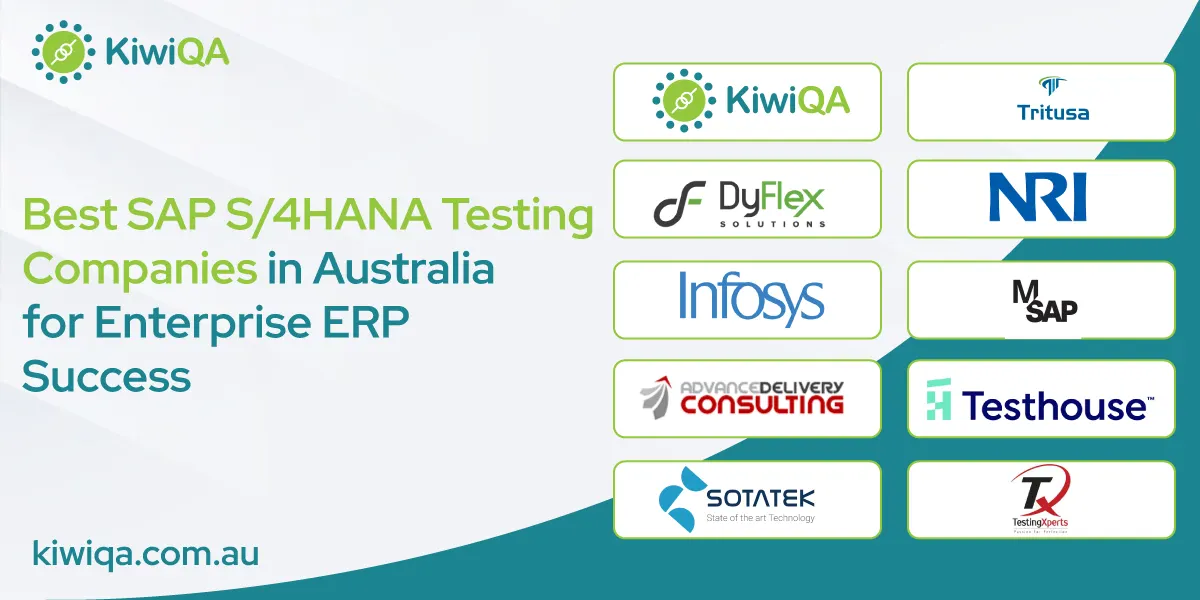
Discover top SAP S/4HANA testing companies in Australia ensuring ERP performance, seamless integrations, and scalable enterprise success.
Read More
Discover common QA gaps in government digital transformation programs and how QA testing services improve quality and project success.
Read More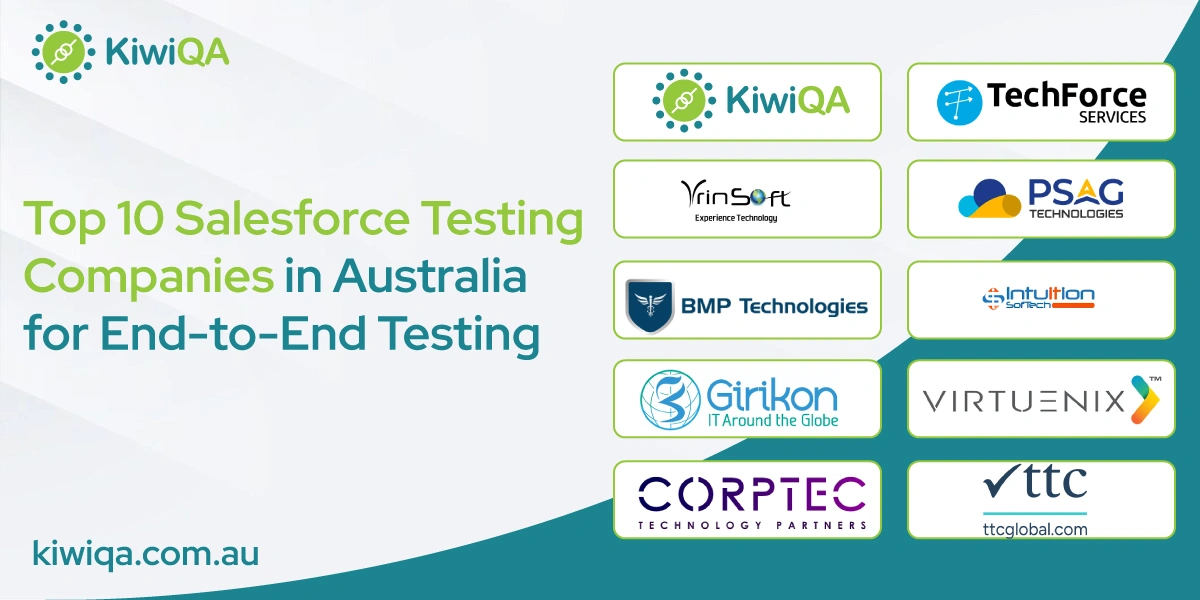
Discover the top 10 Salesforce testing companies in Australia offering end-to-end testing to ensure seamless CRM performance and reliability.
Read More
Explore retail software testing services designed to improve performance, security, and scalability while supporting long-term business growth.
Read More
Fill out and submit the form below, we will get back to you with a plan.
 CRN:
22318-Q15-001
CRN:
22318-Q15-001 CRN:22318-ISN-001
 CRN:22318-IST-001