Performance Testing Best Practices

 KiwiQA
In the competitive era, flawless software is what the market demands. When it comes to delivering high-quality software, performance testing is a must. It evaluates the scalability, speed, and stability of the application under different load conditions and ensures optimum performance. Moreover, in order to avoid the crashing of the software under heavy load conditions, performance testing is imperative. Here are some of the best practices for conducting performance testing efficiently.
While a majority of performance testing focus more on the servers, consider the users of the application is also important. A satisfactory server load test does not always mean that users will experience the same. However, understanding the user perspective and setting a baseline for the user experience can help. Tests need to capture the user interface timings as well as the user experience. Considering the user experience can enhance the success rate of the software.
In order to accurately measure the performance of software, it is important to consider how it performs in real-world situations. To create realistic tests, you need to consider the different client environments as well as devices that might be used to access the software. Building the tests on the basis of variability and randomness in terms of web browsers, operating systems, and mobile devices are important.
Moreover, avoid starting the simulation from a zero-load situation is important as it does not give the real picture. Taking into account all the real facts and creating the tests accordingly can help you get maximum outcomes from the performance testing.

Working closely with developers is another best practice of software testing. Engaging with the team of developers can help the testers in gaining a better understanding of the software and enables them to stay ahead. It can make you aware of the latest updates that are taking place on the development tasks. This can provide you with better insights to progress faster with efficient performance testing. Understanding how the changes in development can create errors in the test script or demand new load tests can further improve the success of performance testing.
Also Read: A Comprehensive Guide To Software Performance Testing
Understanding the application is something that most testers overlook while performing the performance tests. However, before implementation, understanding all the important aspects of the software is important. You need to be well informed about the intended use of the software, its capabilities, and the type of conditions in which it will be used. Moreover, understanding the limitations of the software is also important. Listing down all the essential factors can enhance the effectiveness of performance testing.
Also Read: Performance Testing vs. Load Testing vs. Stress Testing: The Key Differences
Performance testing is usually included in the later phases of the software development cycle. Doing so often makes it difficult to implement the required changes in the development process and increases costs. However, making performance testing a part of the unit tests can resolve this problem. It makes it possible to identify and rectify the potential performance issues at an early stage. This, in turn, enhances the software quality and meets the expectations of the users.
Following the best practices of performance testing stated above will improve the outcomes and ensure the optimum success of the software.

Subscribe to our newsletter for some hand-picked insights and trends! Join our community and be the first to know about what's exciting in software testing.
Welcome to the testing tales that explore the depths of software quality assurance. Find valuable insights, industry trends, and best practices for professionals and enthusiasts.

Explore the 10 best LLM testing tools to evaluate AI model performance, accuracy, reliability, security, and improve large language model testing.
Read More
Explore a complete payment gateway testing checklist for e-commerce applications covering security, transactions, integrations, and seamless checkout experiences.
Read More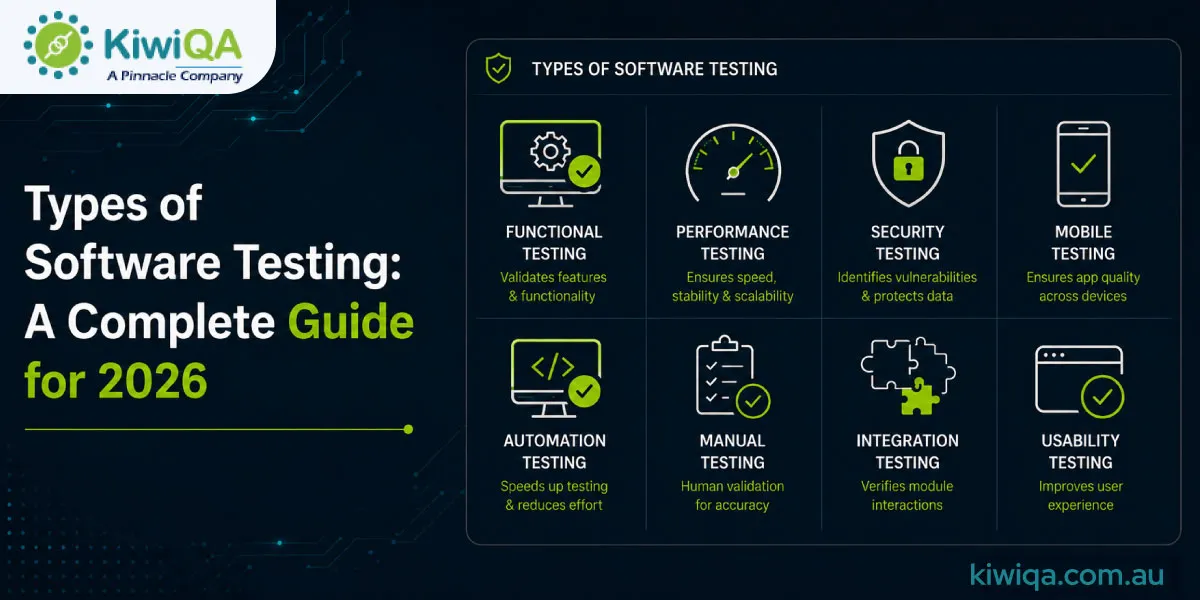
Explore the different types of software testing, including functional, performance, security and automation testing, to build reliable software in 2026.
Read More
Explore automation testing costs in Australia for 2026, including pricing factors, testing types, tools, and ways to optimise your QA budget efficiently.
Read More
Fill out and submit the form below, we will get back to you with a plan.
 CRN:
22318-Q15-001
CRN:
22318-Q15-001 CRN:22318-ISN-001
 CRN:22318-IST-001
 ISOQAR-UKAS


