Payment Gateway Testing Checklist for E-commerce Applications

 Mit Thakkar
Payment Gateway Testing ensures secure, accurate, and reliable online transactions for e-commerce applications. It helps identify payment failures, security issues, and checkout errors before they affect customers.
By testing payment flows, integrations, security, performance, and compatibility, businesses can reduce transaction failures, improve checkout experiences, and build customer trust.
Online shopping depends on fast, secure, and reliable checkout systems. When payments are seamless, businesses can close more sales, but when they fail, they can lose out on sales, customer satisfaction, and trust in the brand.
This is where good e-commerce software testing is crucial. Rigorous testing of payments helps ensure that there are no errors, security problems, or checkout failures before launching. Baymard Institute reports that 70%+ of online carts are abandoned, making smooth checkout testing essential. It eliminates hassles in the payment flow from the customer to the vendor, and makes it a dependable shopping experience while safeguarding the business revenue.
Payment gateway testing refers to verifying and verifying online payment transactions in an application. It guarantees the proper, secure and error-free processing of payments under varying real-world conditions. It also ensures that bills and transaction status are always correct and that order details are captured and kept up to date during the checkout process.
Gateway testing ensures that transactions do not fail or cause payment mistakes the moment it is put to the test, prior to impacting the customer. It also enhances the checkout process, ensuring swift and dependable payments. Correct testing allows businesses to adhere to security standards, like PCI-DSS, minimize abandoned carts due to payment problems, and safeguard sensitive customer and payment data.
By collaborating with a seasoned e-commerce testing company, companies can conduct in-depth payment gateway testing, enhance the security of payment gateways, and ensure reliable payment gateway automation testing. This will keep online stores’ payment systems secure, stable and reliable.

Payment gateway testing includes various aspects to ensure that online payment goes well, safely and consistently throughout the customer journey.
Functional testing is used to ensure that the payment gateway is functioning as it is supposed to. Validates successful payments, failures, refunds, cancellations, payment confirmation and error messages to make sure each scenario is executed as expected.
Integration testing ensures that the payment gateway interacts correctly with the ecommerce platform, bank, payment processor, order management system and other services it is integrated with. It helps to transfer information on the status of transactions and payments between systems with precision.
Security testing can reveal the weaknesses that might lead to the leakage of payment or customer data. It validates data encryption, authentication, access control, session security and defence against payment related threats.
Performance testing is a method for assessing the performance of the payment gateway under various conditions of traffic and transactions. Companies can detect slow response times, system bottlenecks and failures during high-traffic shopping seasons with e-commerce software testing services.
Compatibility testing checks the payment process is consistent throughout various browsers, devices, operating systems, screen sizes and payment methods. This can help ensure a smooth checkout process for customers, regardless of the device they’re using.
Also Read : Best eCommerce Software Testing Companies in India
Payment initiation testing ensures that customers can effortlessly navigate from checkout to the payment gateway. It ensures that the order details, transaction values, currencies, payment methods, and customer data are passed accurately. It also implies that the payment sessions are successfully created, and that customers can access the payment page without any errors.
Payment method testing is verifying that various payment options are functioning properly during checkout. Card testing should include valid, expired and incorrect card information. QR codes, payment links, and app approvals should be included in the testing of UPI. It’s also a good idea to test digital wallets and net banking for successful payments, failures, and proper redirection.
Transaction processing testing verifies that the transactions are processed correctly and recorded. Teams should test successful and declined transactions, insufficient funds, incorrect PINs and payment timeouts. Testing is also important to avoid double-payments if a customer clicks on the payment button more than once. Every transaction should be assigned an ID so that it can be tracked accurately.
Refund and cancellation testing includes checking the processing of cancelled orders and refunds. Tests should also include full and partial refunds, which include refunds for individual items in a multi-items order. In addition, teams must check the refund status update, customer notification and payment records. Cancelled Orders cannot lead to unexpected payment captures or extra fees.
The focus of checkout experience testing is on ensuring a smooth and secure payment process. It verifies navigation between cart and payment, the loading time of the checkout and clear error messages. It is also a good idea for teams to test the payment retry feature, guest checkout and abandoned payments. These checks help make sure that when a customer’s cart or order information is lost, they’ll be able to get back to it.
Security testing helps to ensure that payment data is secure and that unauthorised access is prevented. It should check SSL certificates, encryption, secure API communications, authentication and authorisation. Testing should also uncover weaknesses that may lead to customer or payment information being exposed. Businesses can benefit from an efficient e-commerce website testing and payment gateway testing services to manage secure payment environments and minimise potential security risk.
API testing ensures that communication is performed between the ecommerce application and payment provider. It validates payment requests and responses, authentication keys/tokens, invalid parameters, and error handling. Teams should also perform tests on webhook notifications and transaction callbacks of successful, pending, and failed payments. Accurate testing payment gateway helps ensure accurate payment status transfers between connected systems.
Mobile payment testing helps to make sure that customers are able to transact using various mobile devices and operating systems. Android and iOS devices, mobile wallets (Apple Pay and Google Pay), and various network conditions should all be tested. It is also necessary to review responsive layout and in-app payment flows. These checks, when coupled with payment gateway automation testing, enhance the coverage of testing across devices and browsers.
Also Read : Top 15 Automation Testing Company in Australia for End-to-End Testing
Companies need to develop comprehensive payment test cases, including successful transactions, failures, refunds, and edge cases. Dummy cards can be used in a sandbox environment to detect problems at a safe speed, and automation can speed repetitive and regression testing.
Monitoring transaction logs regularly can reveal payment failures, payment delays, and connection problems. New payment gateway security testing and big code/API updates require regression testing to keep existing payment functions stable, and to keep payment data safe and compliant. A knowledgeable e-commerce testing company can assist keep payment systems secure and dependable.
API testing tools are used to ensure the correct flow of communication between ecommerce applications and payment gateways. Postman can be used to manually call APIs and conduct automated testing, and SoapUI can be used to test REST and SOAP services. REST Assured is a tool that can be used to automate REST API testing for Java applications.
Automation tools are used for testing payment workflows with various browsers and user scenarios. Selenium is used for web browser automation and Cypress and Playwright are for end-to-end testing of modern web applications.
Performance testing tools test the performance of payment systems under varying volumes of traffic. JMeter allows you to test the performance of your server and to test its load capacity, LoadRunner will test the performance of your application for an enterprise that is under a high load.
Security tools are used to detect vulnerabilities that may impact payment and customer data. OWASP ZAP scans Web applications for common security vulnerabilities, and Burp Suite can be used for identifying and analysing security vulnerabilities during testing.
By leveraging these tools alongside e-commerce software testing services, businesses can uphold secure, reliable, and high-performing payment processes.

Payment gateway testing plays a vital role in ensuring secure and smooth transactions in the eCommerce industry. When a customer’s cart breaks, it affects their confidence, leads to a higher bounce rate and reduces your revenue.
Test payment workflows, payment security, APIs, performance and several payment methods before deployment so that you safeguard your business. When you work with professional e-commerce testing services, you can be sure that all transactions, whether it’s credit cards or UPI, go through smoothly every time.
A payment gateway testing checklist helps minimize transaction failures, enhance customer satisfaction, and establish a trustworthy online store.

Subscribe to our newsletter for some hand-picked insights and trends! Join our community and be the first to know about what's exciting in software testing.
Welcome to the testing tales that explore the depths of software quality assurance. Find valuable insights, industry trends, and best practices for professionals and enthusiasts.

Explore the 10 best LLM testing tools to evaluate AI model performance, accuracy, reliability, security, and improve large language model testing.
Read More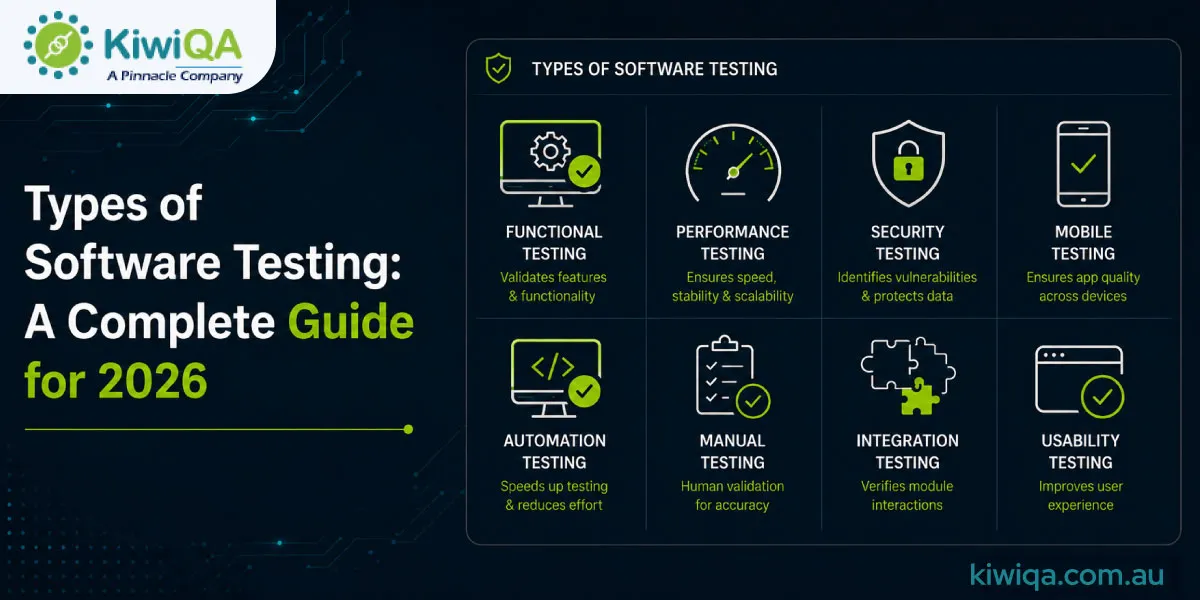
Explore the different types of software testing, including functional, performance, security and automation testing, to build reliable software in 2026.
Read More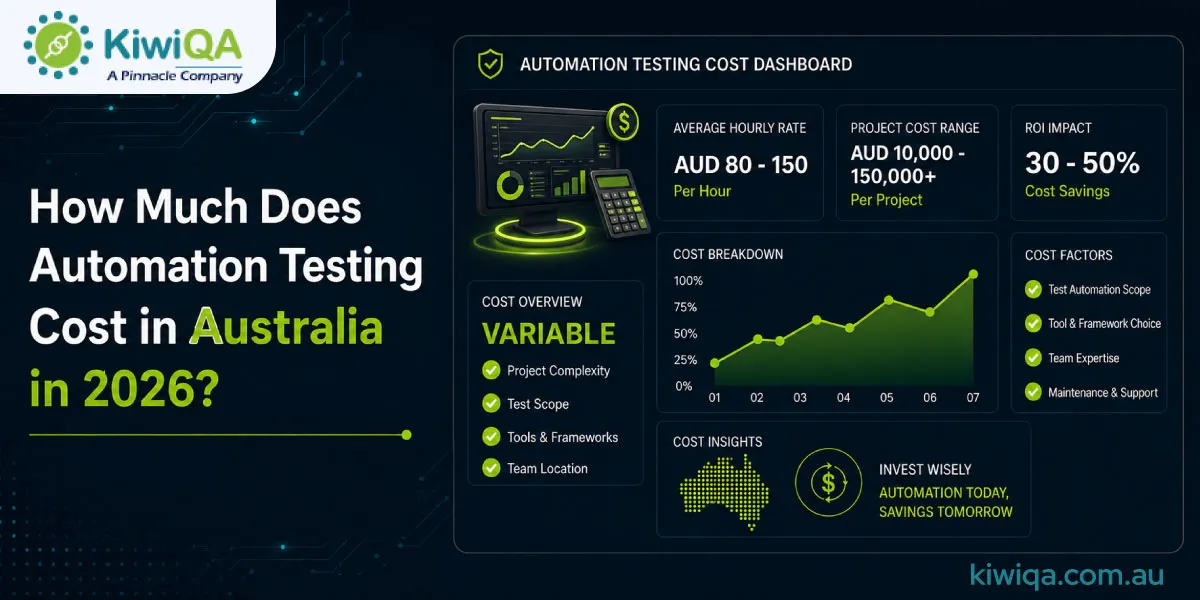
Explore automation testing costs in Australia for 2026, including pricing factors, testing types, tools, and ways to optimise your QA budget efficiently.
Read More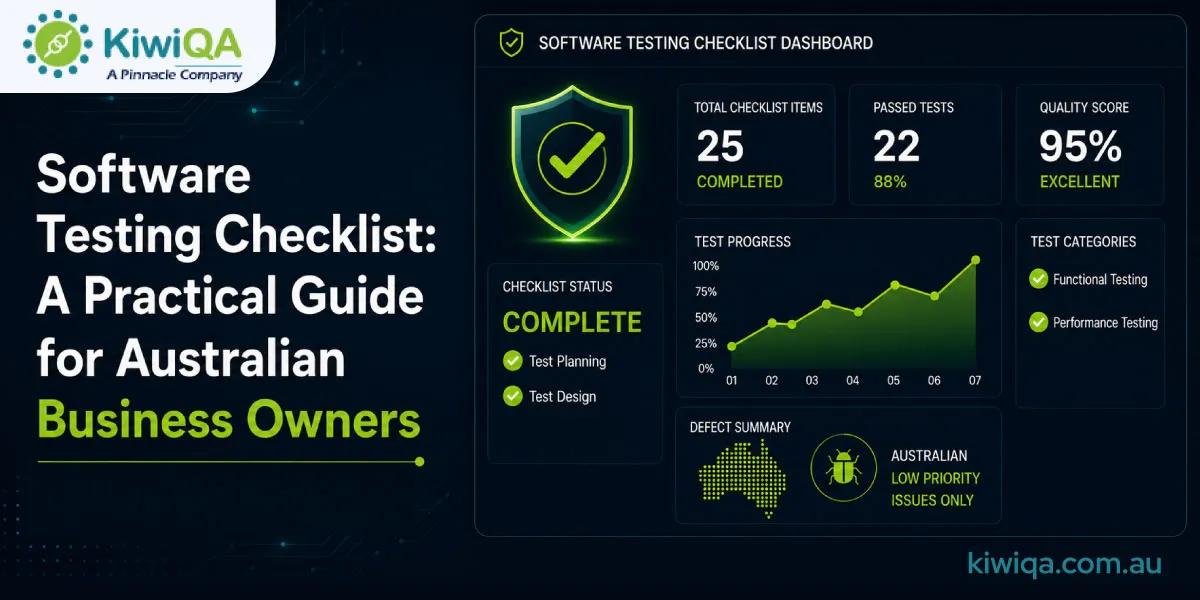
Discover a practical software testing checklist to minimise bugs, improve application performance, and ensure successful software releases.
Read More
Fill out and submit the form below, we will get back to you with a plan.
 CRN:
22318-Q15-001
CRN:
22318-Q15-001 CRN:22318-ISN-001
 CRN:22318-IST-001
 ISOQAR-UKAS


