Advanced Security Testing Tools 2026: Why Australian Businesses Need
As cybersecurity has been evolving at a rapid pace over the past few years, Australian firms have faced multiple challenges. As we are moving to 2026, security is no longer a function but has become the core element of organizational strategies. The worldwide cost of data error may hit $4.44 million.
The reports also said that vulnerability errors rise by 34% every year. These reports show that the attackers are moving quickly, and that’s why businesses should integrate tools for security testing services that navigate these breaches. Because of the following reasons, the security team has shifted to frequent, automated validation layered across the development lifecycle.
The startups and SMEs are widely putting efforts to balance security without creating any complexities. Here, we have mentioned the most popular security testing tools of 2026 along with their benefits and use cases. We’ll also talk about the reasons Australian businesses are relying on them, along with the key practices to choose and future trends.
Australian firms are facing huge financial losses due to cyberattacks and data breaches. The costs involve legal penalties, operational downtime, recovery expenses, and user compensation. Firms’ interruptions can minimize productivity and revenue, whereas reputational damage may hamper user loyalty and investor confidence. The advanced tools for software security testing services support tracking errors early and minimizing potential financial risks.
Users are expecting firms to safeguard their personal and financial information by using strong security features. A small gap can limit consumer confidence and damage long-term brand credibility. The advanced tools for cybersecurity testing services support firms in managing compliance and strengthening data privacy approaches. Firms need security testing tools to demonstrate their commitment to user protection, support firms to build trust, and retain loyal customers.
Remote or hybrid work models have increased the security risks for Australian firms. Employees accessing the business system from various locations and devices create additional endpoint security challenges and broaden attack chances. The advanced security testing tools support assessing errors, secure remote access points, and safeguard crucial organization data across a distributed work environment.
Most of the Australian firms struggle with a security talent shortage, making it tough to manage gaps effectively. The modern security QA tools used by a security testing company allow automation to minimize manual workload, enabling the team to focus on crucial tasks. The following tools also enhance threat detection speed and response efficiency. It supports firms in managing strong security operations with minimal resources.
The modern security testing tools support firms in identifying system errors before cybercriminals can exploit them. Frequent QA enhances visibility into vulnerabilities, strengthens security, and supports quick incident response planning. By simulating real-world attack scenarios, firms can limit breakdown and the chances of getting cyber threats.

The advanced security testing tools by a software security testing company uses AI to identify and predict cyber threats before they cause a major error. AI-driven systems measure a vast volume of security data, spot behavior patterns, and generate smart threat alerts in real-time. It’s a proactive approach that supports firms to strengthen security, limit response time, and avoid costly cyberattacks efficiently.
Automation is another crucial feature of advanced API security testing tools. It helps firms to enhance efficiency and limit manual workloads. The automated solutions perform frequent scanning, address weaknesses quickly, and support quick solutions. By limiting repetitive security tasks, firms can focus on strategic cybersecurity initiatives while managing consistent protection across apps, networks, and virtual infrastructures.
As firms are widely dependent on cloud platforms & APIs, security QA tools must offer strong protection for advanced apps and connected systems. These tools support monitoring errors in APIs, cloud workloads, and distributed environments while supporting multi-cloud security approaches. The strong cloud & API security capabilities allow data safety, secure integrations, and enhance resilience against rising cyber threats.
The security QA tools must integrate smoothly with the DevSecOps approaches and CI/CD pipelines to support secure software development. The built-in security inspection during development helps the support team to monitor errors earlier and limit release risks. The integration allows faster and safer software release while enhancing collaboration between teams. It validates frequent safety throughout the SDLC.
The tools for security testing you choose for software security testing services must offer clear visibility into their security posture through interactive dashboards and analytics. The modern reporting capabilities offered by software security testing services allow firms to track threats, measure vulnerabilities, and manage frequent compliance effectively. These metrics support quick decision-making, enhanced management, and strong security governance across firm operations.
Also Read: Complete Guide to Security Testing for E-commerce Websites and Mobile Apps

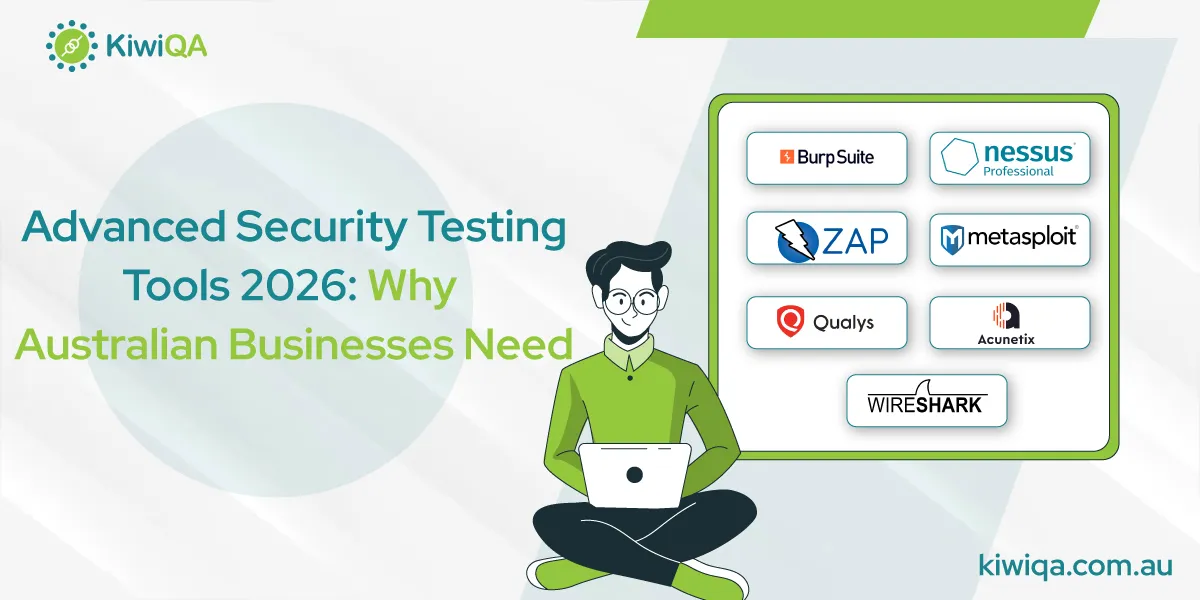
Burp Suite facilitates effective penetration testing, vulnerability scanning, and traffic analysis for enterprises. Burp Suite is necessary for Australian companies to improve application security, stop data breaches, and find vulnerabilities. In 2026, companies handling sensitive client data and advanced digital applications will find it useful due to its integration with DevSecOps workflows. The tool supports both manual & automation QA tasks.

Nessus is an effective vulnerability assessment tool that finds security flaws in systems, networks, and applications. It assists businesses in identifying potential cyber threats and configuration mistakes before hackers do. Vulnerability scanning, malware detection, compliance audits, and risk prioritization are important functionalities.
Nessus helps Australian organizations by lowering operational risks, enhancing compliance readiness, and supporting proactive cybersecurity management. Nessus helps companies to continually monitor their IT infrastructure and maintain stronger security defenses across multiple environments.

The OWASP community created OWASP ZAP, a free QA security tool. During the development and testing stages, it assists security teams and developers in finding weaknesses in online applications. Because OWASP ZAP is affordable, adaptable, and appropriate for companies of all sizes, it is still quite popular in 2026. It is used by Australian organizations to enhance application security and encourage safety against emerging cyberattacks.

Cybersecurity experts utilize Metasploit, a top penetration testing platform, to mimic cyberattacks and find exploitable flaws. It makes it possible for companies to verify defense strategies and evaluate network security. In order to improve overall resilience against ransomware, phishing, and advanced attacks, businesses should use this tool. It reinforces cybersecurity strategy and trains security teams, and that’s the reason why organizations are depending more and more on it.

Qualys VMDR is a tool popular for managing errors, addressing them, and responding to them in real-time. It provides companies with a cloud-based platform for security monitoring. It assists companies in identifying weaknesses, setting risk priorities, and automating the IT environment. Patch management, asset discovery, vulnerability assessment, and real-time threat detection are important aspects.
Qualys VMDR supports compliance and risk management standards and offers centralized visibility into cybersecurity concerns. In 2026, as businesses continue to implement cloud and hybrid infrastructures, Qualys VMDR contributes to enhanced operational security. The tool offers faster response times and a more robust defense against advanced cyberattacks.

Acunetix is an advanced web vulnerability scanning tool that finds security flaws in web apps, websites, and APIs. It assists companies in promptly and precisely identifying vulnerabilities, including SQL injection, cross-site scripting, and authentication flaws. Automated scanning, API security testing, compliance reporting, and connection with development workflows are some of the key features.
Acunetix helps businesses by streamlining vulnerability management and enhancing application security without requiring a lot of manual labor. In order to properly secure client data, uphold compliance, and safeguard digital company processes, Australian organizations will increasingly rely on such tools.

These are the premium tools used by the QA team to assess, record, and measure network traffic in real-time. It assists cybersecurity teams in effectively identifying security risks, troubleshooting network problems, and looking into suspicious activity. Packet inspection, protocol analysis, real-time traffic monitoring, and comprehensive reporting capabilities are important characteristics.
Because cloud usage, remote work, and linked gadgets present enterprises with more sophisticated network security concerns in 2026, Wireshark is still very important. Wireshark is used by Australian organizations to enhance network visibility and identify anomalous traffic patterns that can point to cyberattacks or unauthorized access attempts.
The advanced application security testing tools support firms in identifying gaps before cyber criminals can exploit them. Prior monitoring limits the risks of cyberattacks, data breaches, and unauthorized access. The following tools frequently track the system, app, and network. It allows firms to strengthen their security posture, enhance risk management, and safety against evolving cybersecurity threats.
Security QA tools offer real-time alerts and automated monitoring capabilities, which enable firms to respond quickly to cyber threats. Quick detection allows the security team to address incidents instantly and implement safety measures efficiently. It limits the impact of attacks and operational errors and enhances overall incident response practices for an advanced business environment.
Cybersecurity incidents can cause major financial loss because of downtime, legal penalties, and recovery expenses. The advanced security QA tools support preventing costly data errors by monitoring risks early and limiting system errors. They also limit operational downtime, support firms to manage productivity, avoid revenue loss, and safeguard financial stability.
Strong cybersecurity approaches support firms in building user confidence and managing a positive brand reputation. The advanced SAP security testing tools strengthen data protection measures and limit the risk of crucial data being revealed. By following the right approaches for privacy and security, firms can enhance business credibility in a competitive market.
Automated security QA tools streamline compliance management by automating error assessments, reporting, and the auditing process. Frequent compliance tracking supports firms in matching industry regulations and security standards efficiently. These tools offer clear visibility into security performance, making it easy for firms to manage regulatory demands and limit the risk of violations.
To select the right automated security testing tools, first, track whether you need a web, cloud, API, or network security testing solution. The tool software security testing company selects for your business must be aligned with industry compliance. It must fulfill operational goals and have the potential to navigate challenges. Organization size, infrastructure complexity, and compliance demands play a major role in choosing the ideal tool.
The ideal security testing tools must evolve as your firm grows and the need for cybersecurity becomes complicated. Firms must choose solutions that support expanding infrastructure, a remote team, and a rising workload. Cloud compatibility is also necessary for firms using hybrid & multi-cloud environments. It ensures flexibility, consistent security, and performance across virtual operations.
An advanced security QA tool must involve AI-driven scanning and automation capabilities to enhance efficiency and limit manual tasks. The automated error detection, frequent monitoring, and smart threat analysis support firms in measuring risks faster. Compare the automation feature in a tool since it validates the cybersecurity operations while supporting quick response time & security management.
Organizers must analyze both the pricing and the long-term value of security QQ tools before making a decision. Before you use any tool, first look for its subscription costs, scalability, and maintenance costs. The tool must offer support service, frequent updates, and resources. These factors are necessary for managing effective long-term security safety.
Also Read: Security Testing for SaaS Products: A CTO’s Checklist
These future-proof technologies are transforming cybersecurity by allowing smart threat prediction and automated incident response. The advanced security testing tools can measure a large amount of data, address unusual patterns, and respond to threats in real-time. These technologies support firms in enhancing security efficiency and limiting response delays in challenging environments.
These models are becoming crucial for advanced firms by focusing on identity-based access controls and frequent authentication. Firms frequently verify users and devices before allowing users to access. AI security testing tools allow firms to identify weaknesses in zero-trust implementation and strengthen cybersecurity resilience effectively.
These tests integrate cybersecurity practices earlier in the SDLC. By monitoring errors throughout the development phase, organizations can limit the cost of restoration while enhancing software quality. The following approach supports faster vulnerability fixes, strong DevOps integration, and secure software release.
As firms depend on cloud-native apps and APIs, security QA tools are increasingly focused on safeguarding these environments. API vulnerabilities management, cloud protection, and frequent assessment allow firms to minimize cyber risks. The following trend is necessary to secure virtual services and manage organizational continuity.

Cyber threats will frequently evolve in 2026, and that’s why the popularity of tools is rising. Firms that adapt structured and proven practices and technologies are best known for managing risks and maintaining trust. The following tools we have mentioned play a strong role in advanced software development. Before a security testing company implements any tool, validate that it aligns with the firm’s demands by collaborating with the security testing company.

Subscribe to our newsletter for some hand-picked insights and trends! Join our community and be the first to know about what's exciting in software testing.
Welcome to the testing tales that explore the depths of software quality assurance. Find valuable insights, industry trends, and best practices for professionals and enthusiasts.
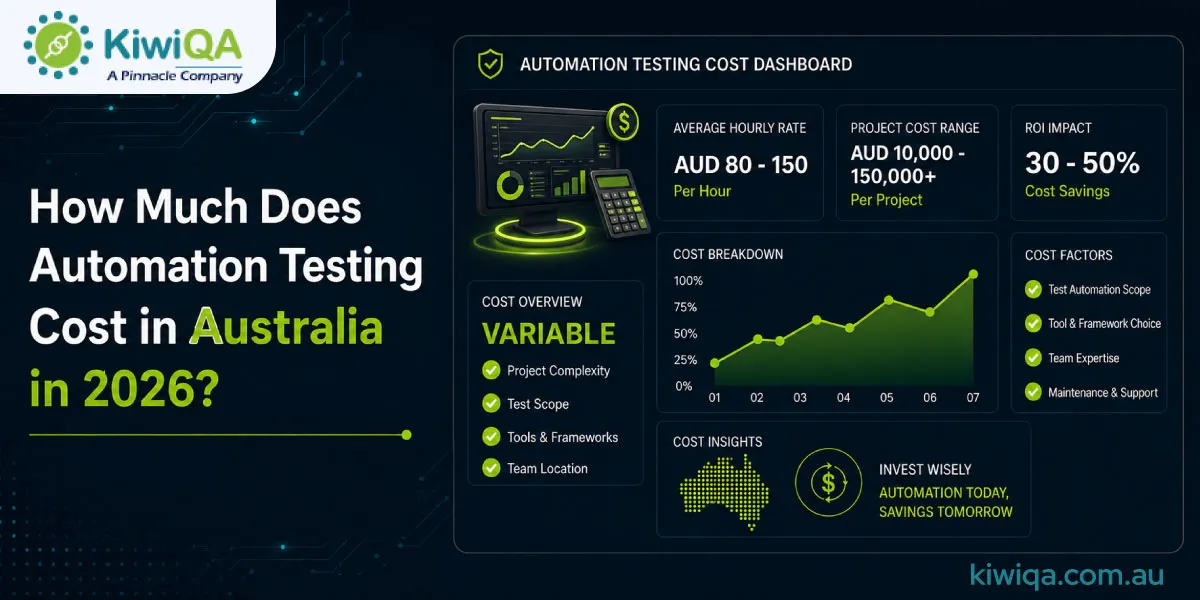
Explore automation testing costs in Australia for 2026, including pricing factors, testing types, tools, and ways to optimise your QA budget efficiently.
Read More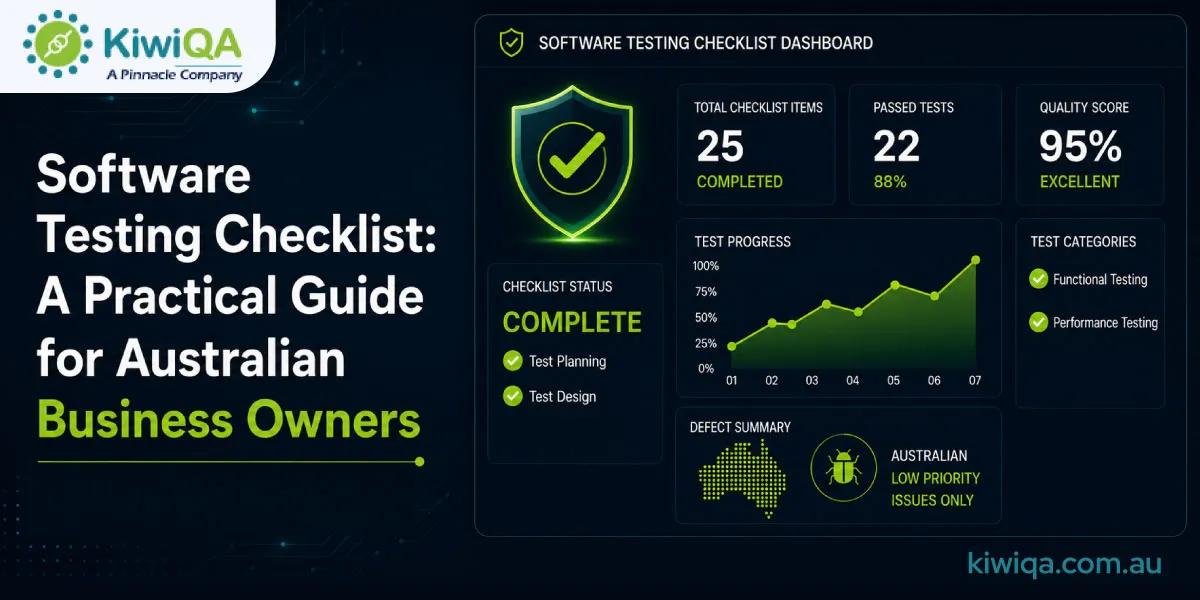
Discover a practical software testing checklist to minimise bugs, improve application performance, and ensure successful software releases.
Read More
SaaS Testing Company in Australia offering end-to-end QA solutions with automation, functional, API, security, and performance testing services.
Read More
Discover the 2026 test automation strategy guide for AI-driven software testing, featuring tools, trends, best practices, and smarter QA workflows.
Read More
Fill out and submit the form below, we will get back to you with a plan.
 CRN:
22318-Q15-001
CRN:
22318-Q15-001 CRN:22318-ISN-001
 CRN:22318-IST-001
 KiwiQA