SaaS Testing Best Practices Tech Leaders Should Prioritize

 KiwiQA
In 2026, SaaS testing has evolved from a trend into a business necessity, with companies focusing on rapid feedback, quality assurance, and risk management to deliver seamless user experiences. Nearly 92% of businesses now conduct performance testing to handle peak traffic efficiently, making SaaS testing best practices essential for reducing user churn and maintaining software reliability. As organizations continue developing custom SaaS platforms with unique value propositions, the demand for Custom SaaS Testing Services and advanced testing strategies continues to grow rapidly.
It’s surprising to know that the SaaS market has grown 16X since 2015! In SaaS powered industry, 96% of apps used are SaaS-based. The industry analysts suggest that the worldwide SaaS will reach $300 billion by 2027. As adoption rates are increasing to 90%, this growth showcases how firms widely rely on cloud-hosted apps anytime and anywhere.
However, the growth comes with significant complexities. A failed SaaS product doesn’t impact a basic installation, but also users. Performance errors, security breaches, or compatibility bugs can smartly hamper user trust and churn. SaaS Testing Services gives a systematic validation of cloud-hosting, multi-tenant software to verify its reliability, security, and consistency. Most of the testing strategies used in SaaS apps are not successful because the teams are relying on traditional software QA methods.
This guide emphasizes best practices for SaaS testing in 2026. We’ll also discuss the basics, the role of SaaS testing company, benefits, challenges, future trends, and much more.
SaaS testing is a method of SaaS app functionality validation. It is carried out to determine whether they meet specific demands or not. It also reveals the hidden bugs through common testing types. Businesses can successfully deploy SaaS apps in the cloud, on-premises, and both. Depending on the release model, SaaS testing strategy might vary. SaaS QA verifies that the software matches the functionality and business goals. Businesses must conduct this testing to validate user authentication, security, scaling, and seamless 3rd party integrations.
SaaS QA support firms accelerate software delivery by tracking mistakes prior to SDLC. automation, continuous, and regression QA limits manual effort and drives validation cycles. It enables the development team to release patches, updates, and new features frequently without hampering software quality. Quick-release cycle support firms respond smartly to the evolving market. It enhances agility and manages competitive benefits while ensuring stable app performance for users.
Effective SaaS security testing enhances user experience by validating that the app functions smoothly across browsers, devices, and OS. Thorough testing supports bug elimination and usability errors that can frustrate users and limit user satisfaction. Testing also contributes to seamless, scalable user journeys. When users consistently experience stable and responsive software, firms can build trust and retention rate and strengthen their reputation in the SaaS market.
Frequent SaaS QA support firms limit breakdowns and avoid unexpected system failures that can hamper user operations. Various testing types are conducted to monitor infrastructure errors before release, limiting the chances of crashes in high traffic. Frequent monitoring & regression QA ensure new updates don’t hamper existing functionalities. By proactively monitoring and fixing errors, firms can enhance software stability, manage service availability, and limit financial errors caused by technical errors.
SaaS application testing supports product scalability by verifying apps can effectively manage vast numbers of users, transactions, and integrations. Scalability QA evaluates how software performs under rising traffic and tracks performance errors before they hamper users. It supports firms to keep their platform ready for future growth without hampering reliability. QA testing verifies that infrastructures, databases, and cloud environments expand smoothly. It enables SaaS businesses to deliver consistent performance to meet user demands.

Testing multi-tenant SaaS apps can be tough because various users share the same infrastructure while demanding separate data security & configurations. QA must verify that the software matches the highest performance, functionality, and privacy. Management of various user roles, customization, and permissions improves testing complexity. With accurate validation, errors like inconsistent user experience, configuration, and data leaks may occur. It makes comprehensive QA necessary for managing reliability & user trust.
Saas platforms quickly release updates and new features to stay competitive and match changing user demands. Frequent release can drive the risks of compatibility errors and introduce errors into existing functionality. Frequent regression QA is necessary to validate that the updates don’t hamper the user experience. Managing frequent release demands effective automation and a QA process to manage stability while delivering quick and consistent outcomes.
It’s a basic testing complexity because users access apps through various browsers, OS, and devices. Features that work accurately in a single browser might display incorrectly because of bad technology choices and rendering errors. The inconsistencies can hamper customer expectations and accessibility. Comprehensive compatibility QA verifies the app serves a consistent user experience across platforms. It supports firms to manage performance, accessibility, and diverse user groups.
This challenge is due to the cloud-based apps often storing crucial user and firm information. An insecure API and poor encryption can expose apps to unauthorized access and threats. The QA SaaS automated testing team must validate the data safety practices, compliance demands, and access control to minimize security errors. Frequent vulnerability practices help to monitor weaknesses early and verify that the SaaS platform remains secure and trustworthy for users and firms.
SaaS apps basically integrate with the 3rd-party tools, payment gateways, and APIs to support firms’ operations. However, integration errors can be caused by incompatible updates, network errors, and unstable APIs. These failures may hamper workflows, minimize productivity, and craft a poor user experience. Comprehensive integration QA verifies that the connected systems communicate and exchange data efficiently. It verifies reliable functionality and seamless performance across the SaaS ecosystem.

Designing a comprehensive test strategy is a strong SaaS testing best practice. It is necessary to verify consistent SaaS app performance and quality. Tech leaders must define testing goals based on business requirements, customers’ expectations, and product goals. Aligning the QA process with the firm’s priorities, support team on features that directly impact users & operations.
Identifying & prioritizing high-risk areas enables testers to address crucial errors and performance concerns. Designing a detailed test coverage plan verifies that major functionalities, integrations, and workflows are validated effectively. It reduces production risks & enhances software reliability across development and release.
Automate frequent testing processes to support a SaaS firm in enhancing efficiency, limiting manual effort, and driving software release. Regression testing automation verifies that current features continue functioning accurately after updates. Integration of automated testing within CI/CD pipelines supports frequent validation throughout development & deployment stages.
Automation enhances faster bug tracking by smartly identifying errors across various environments. The following practices enhance release efficiency and limit human mistakes. It allows testing expertise to prioritize complicated testing scenarios. Effective automation practices support firms in managing software quality, supporting frequent release and innovation.
Prioritize SaaS security testing is crucial to safeguard SaaS apps from cyber threats, data breaches, and unauthorized access. SaaS security QA support identification of errors in APIs, database, authentication errors, and cloud infrastructure. Organizations must perform frequent error assessment, penetration testing, and authorization testing to strengthen app security. Data encryption validation ensures crucial data remains safeguarded during storage and transmission. Compliance QA for regulations supports firms in avoiding legal risks and managing user trust while managing secure SaaS operations.
Also Read: List of Automation Testing Services That Improve Business Agility
Performance & load QA are necessary for ensuring SaaS apps remain stable, responsive, and scalable under vast workloads. Tech leaders should conduct peak traffic simulations to measure how the system performs during high-traffic periods. Stress QA supports identifying system limitations & potential errors under extreme conditions.
Scalability validation verifies that the infrastructure effectively supports vast usage demands without hampering performance. Tracking response time supports businesses in managing a smooth user experience and tracking errors early. Effective performance QA limits downtime risks, uplift stability, and consistent app functionality across conditions.
Validating cross-platform compatibility supports SaaS apps in delivering a consistent user experience across a vast range of devices, browsers, and OS. Browser compatibility QA validates that features function accurately in platforms. Mobile responsive validation verifies apps adapt smoothly to vast screen sizes and devices. Device-based QA supports identifying hardware-driven errors that might affect performance or usability. OS compatibility testing ensures stable functionality across devices. Comprehensive QA enhances user satisfaction and app reliability.
Conducting API and integration QA is crucial for verifying seamless communication between SaaS apps and connected 3rd-party systems. Firms must validate API responses to verify accurate data exchange, secure performance, and functionality. 3rd-party integration QA supports compatibility errors, which might hamper workflows. Data flow validation moves accurately across systems without delays. Microservices testing also supports validating interactions between distributed app components. Comprehensive testing enhances system reliability, efficiency, and limits operational errors.
QA teams can more precisely assess the functionality and performance of SaaS applications by maintaining realistic test environments. Ensuring that testing circumstances closely resemble real-world operating environments minimizes unforeseen problems after release. Testers can verify procedures, performance, and usability in real-world circumstances.
Validation of data consistency guarantees accurate testing results across various systems and integrations. Quick monitoring of configuration gaps is another benefit of environment monitoring. Smoother software releases and improved application stability can also be obtained by this. Following these practices also increases testing accuracy and lowers deployment risks.
SaaS companies may maintain reliable software performance and promptly discover problems by regularly evaluating application quality. Tools for real-time monitoring offer insight into application stability, infrastructure performance, and system health. Error tracking systems assist development teams in identifying, evaluating, and fixing flaws before they have a major negative influence on users.
Businesses can enhance usability and feature performance by using user behavior analytics. Teams can improve overall software quality, handle new risks, and optimize testing procedures on a regular basis by using a continuous improvement approach. Better user experiences and quicker problem-solving are all supported by ongoing monitoring.
Functional QA verifies that every feature of SaaS apps works based on business and user demands. It validates core workflows, functionalities, and user interactions across the platform. The QA checks whether buttons, API, forms, and navigation processes perform accurately without mistakes. UI functionality assesses an app’s potential to offer a smooth user experience. It identifies the gaps quickly and enhances software reliability, minimizes operational errors. Use this testing to ensure users can access it efficiently without interruptions.
Regression testing validates that new upgraded features and bug fixes don’t hamper the current functionalities within SaaS apps. It tests that the crucial workflows of the software operate perfectly after every modification. SaaS platform receives frequent updates, so through regression testing, the business can maintain stability. Automated regression QA enhances accuracy, speed, and efficiency by limiting manual efforts. It allows the QA team to test the app quickly while supporting safer and faster release.
The testing safeguards SaaS apps from cyber threats, data breaches, and unauthorized access. It involves pen testing to measure gaps that hackers could exploit. Data safety validation ensures that crucial users’ data is securely stored and transferred within strong encryption practices. Access control QA validates that only allowed users can get accessibility. Regular security testing supports firms in maintaining compliance, strengthening users’ trust, and limiting risks. It verifies that the apps remain secure against evolving threats.
Performance QA measures how a SaaS app behaves against various workloads and user conditions. Load testing measures system performance during rising traffic levels, whereas stress testing examines how an app operates in sudden spikes. Scalability QA ensures the platform can grow effectively as user demand improves. The QA method supports identifying errors, enhancing app speed, limiting downtime risks, and ensuring consistent performance. It offers users a consistent performance and reliable outcomes.
It focuses on evaluating how easy and efficient a SaaS app is for users to navigate and operate. It verifies overall user experience by identifying confusing layouts, navigational errors, or design inconsistencies. Accessibility testing ensures the app can be used by individuals with various abilities and across a wide range of devices. By enhancing usability, firms can improve user satisfaction, limit user frustration, and encourage engagement. This testing creates an intuitive and user-friendly SaaS platform for vast audiences.
Compatibility QA verifies that a SaaS app functions seamlessly across various browsers, platforms, and OS. The testing verifies performance and functionality in browsers. Device assessment measures how the app performs on desktops, smartphones, and tablets with vast screen sizes. Platform validation proves compatibility across OS and environments. Compatibility testing support firm delivers a seamless user experience, limits technical errors, and uplifts the user base.
AI-driven automation test is revolutionizing advanced SaaS automated testing by enhancing accuracy, speed, and efficiency. Advanced automation tools support self-healing test scripts, which automatically adapt to UI changes, limiting maintenance efforts. SaaS automated QA allows smart error detection by identifying errors more effectively. Quick test execution enables the team to validate the features quickly during the integration and release process. It supports firms to deliver scalable software upgrades within limited timeframes.
Predictive analytics in QA is enhancing SaaS quality assurance by utilizing historical testing data & AI-powered insights to track potential risks. It supports the QA team to predict failure patterns, prioritize high-risk areas, and enhance testing strategies efficiently. Failure forecasting allows firms to avoid crucial errors that hamper user engagement and stability. Predictive analytics also offers valuable performance insights. It supports firms to optimize app reliability, drive decision-making, and manage software quality.
Frequent QA support SaaS business delivers software updates faster while managing high quality and stability. By integrating automated QA throughout the SDLC, the team can manage errors early and limit delays in release. Frequent testing significantly limits manual effort by automating repetitive validation processes and feedback cycles. It also enhances software quality by validating that every update and integration is thoroughly monitored before release. Continuous testing maintains reliable app performance and user satisfaction.
For SaaS testing success, leaders must track the error detection rate. It measures how efficiently a SaaS testing process identifies bugs before software release. The high detection rate indicates improved software quality & strong testing efficiency. Monitoring these metrics supports firms in identifying recurring errors, unstable modules, and weak development areas. Tracking error trend allows the team to enhance QA strategies, limit production errors, and serve a reliable SaaS app.
Test coverage determines the percentage of app features, workflows, and code validation through testing. High test coverage supports limited untested areas, which may contain hidden errors. The metrics enable firms to determine testing efficiency and verify functionalities. Enhanced test coverage strengthens software reliability, limits post-release issues, and supports stable SaaS app performance across vast user scenarios.
MTTR determines how quickly the development & testing team can navigate software errors. The low MTTR showcases faster error resolution, improved collaboration, and operational efficiency. Monitoring this metric supports firms in limiting downtime, user impact, and enhancing the management process. Effective resolution also supports frequent delivery practices, ensuring the SaaS app remains stable and responsive to evolving user and business demands.
The following metrics support firms in determining the stability, speed, and reliability of the SaaS platform. The key indications are downtime tracking, app responsiveness, and system availability. Following these metrics supports the team in tracking performance errors and enhancing user experience. Smooth navigation and faster loading speed also help calculate the app’s performance. These metrics support businesses in managing consistent stability and performance.
Also Read: Automation Testing Benefits Every CTO Should Prioritise in 2026
Lack of prioritizing security QA can reveal SaaS apps to serious cyber threats, unauthorized access, and data errors. SaaS platforms safeguard crucial information of both the firm and users. Weak security approaches can hamper user trust and brand reputation. Without accurate vulnerability assessment & pen QA, hidden risks may remain undetected. Frequent security testing supports tracking weaknesses and ensures compliance with industry regulations. Approaching the right security practices helps to strengthen app protection against evolving threats and attacks.
This small mistake can cause slow app speed, crashes, and poor user experience during high traffic. SaaS apps must manage vast workloads effectively while maintaining stability and responsiveness. Without any testing, firms might fail to identify performance errors before release. It can result in errors, ROI loss, and lack of engagement. Performance QA supports system optimization and verifies consistent functionalities against various conditions.
Depending on the manual testing, it can slow down the development cycles and increase testing costs for SaaS businesses. Manual QA demands time and effort when feature enhancements and frequent upgrades are required. It also minimizes the chances of manual mistakes and inconsistent test outcomes. The best practices of SaaS testing support speed, accuracy, and efficiency by managing repetitive test cases. Blending manual and automated QA to verify quality software, quick release, and reliable app performance.
Inadequate test coverage can leave crucial errors undetected and increase the chances of production failures and poor user experience. When a firm tests only limited features, issues related to integration, security, or performance might be unnoticed. Comprehensive QA should cover major functionalities, browsers, devices, and user scenarios. Test coverage supports error identification, enhances software reliability, and limits post-release mistakes. The right approach verifies that the SaaS apps perform consistently throughout various environments.
This mistake can create inconsistent testing results and increase release risks for SaaS apps. Poor testing may cause errors to appear only after release, affecting user experience and software reliability. Outdated data and misconfiguration can delay the testing process and limit accuracy. Accurate environment management verifies real testing conditions and reliable test data. It supports the team for a smoother release and manages consistent app performance.

Custom SaaS app testing ensures a crucial success factor for business. Custom SaaS apps continue evolving, so investing in test automation becomes beneficial for smart cloud solutions. In a competitive market, measuring software quality is necessary to manage user trust and sustainable growth.
Traditional practices are insufficient to keep your business current with modern development. High-performing QA supports business from every stage of development and testing. However, there are challenges, and to counter them, it’s suggested to follow the top 8 SaaS testing best practices mentioned above. The SaaS testing company uses these practices to drive QA efficiency.

Subscribe to our newsletter for some hand-picked insights and trends! Join our community and be the first to know about what's exciting in software testing.
Welcome to the testing tales that explore the depths of software quality assurance. Find valuable insights, industry trends, and best practices for professionals and enthusiasts.

Explore the 10 best LLM testing tools to evaluate AI model performance, accuracy, reliability, security, and improve large language model testing.
Read More
Explore a complete payment gateway testing checklist for e-commerce applications covering security, transactions, integrations, and seamless checkout experiences.
Read More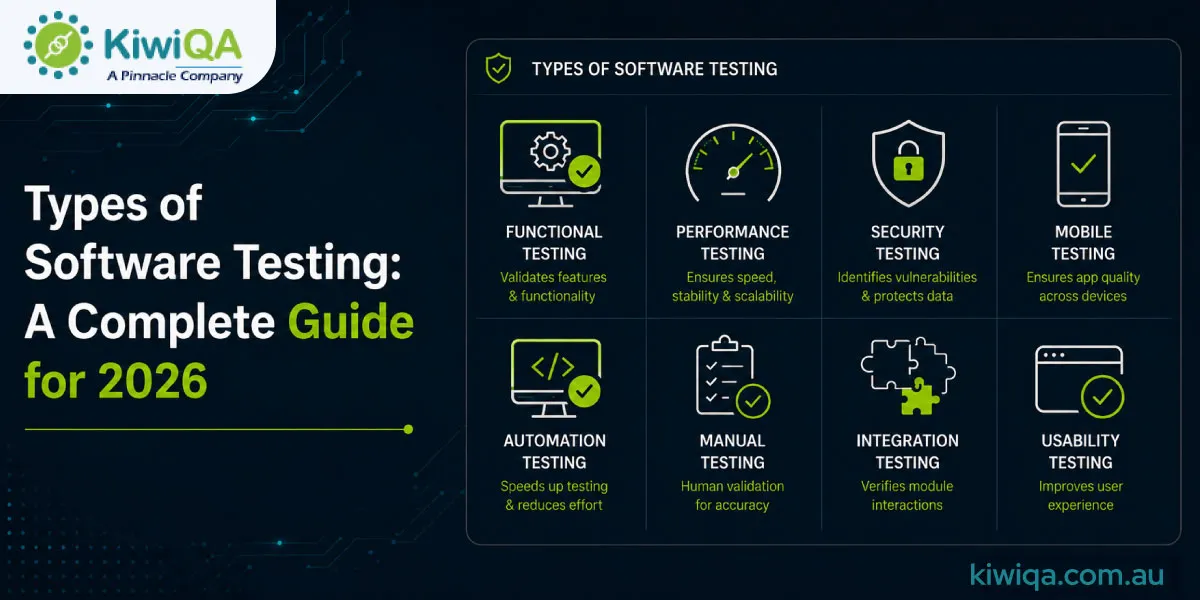
Explore the different types of software testing, including functional, performance, security and automation testing, to build reliable software in 2026.
Read More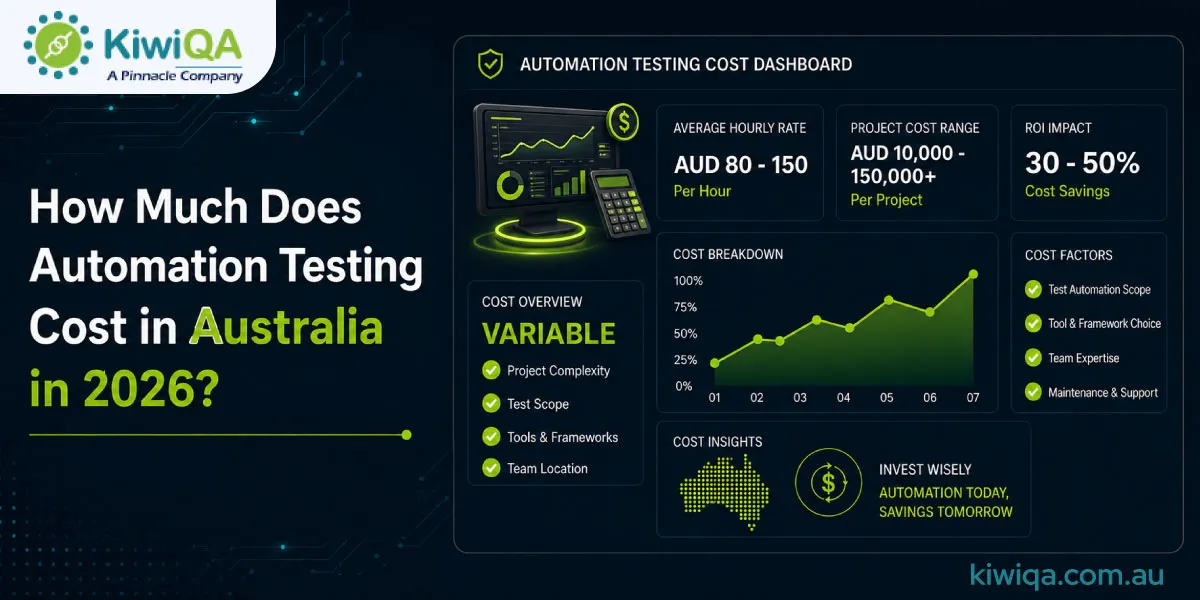
Explore automation testing costs in Australia for 2026, including pricing factors, testing types, tools, and ways to optimise your QA budget efficiently.
Read More
Fill out and submit the form below, we will get back to you with a plan.
 CRN:
22318-Q15-001
CRN:
22318-Q15-001 CRN:22318-ISN-001
 CRN:22318-IST-001
 ISOQAR-UKAS


